Collecting Vinyl Kaiju: The Movie Monster Series
A practical guide to Bandai's Movie Monster Series, including soft vinyl, paint, articulation, revisions, Giga releases and used-condition checks.
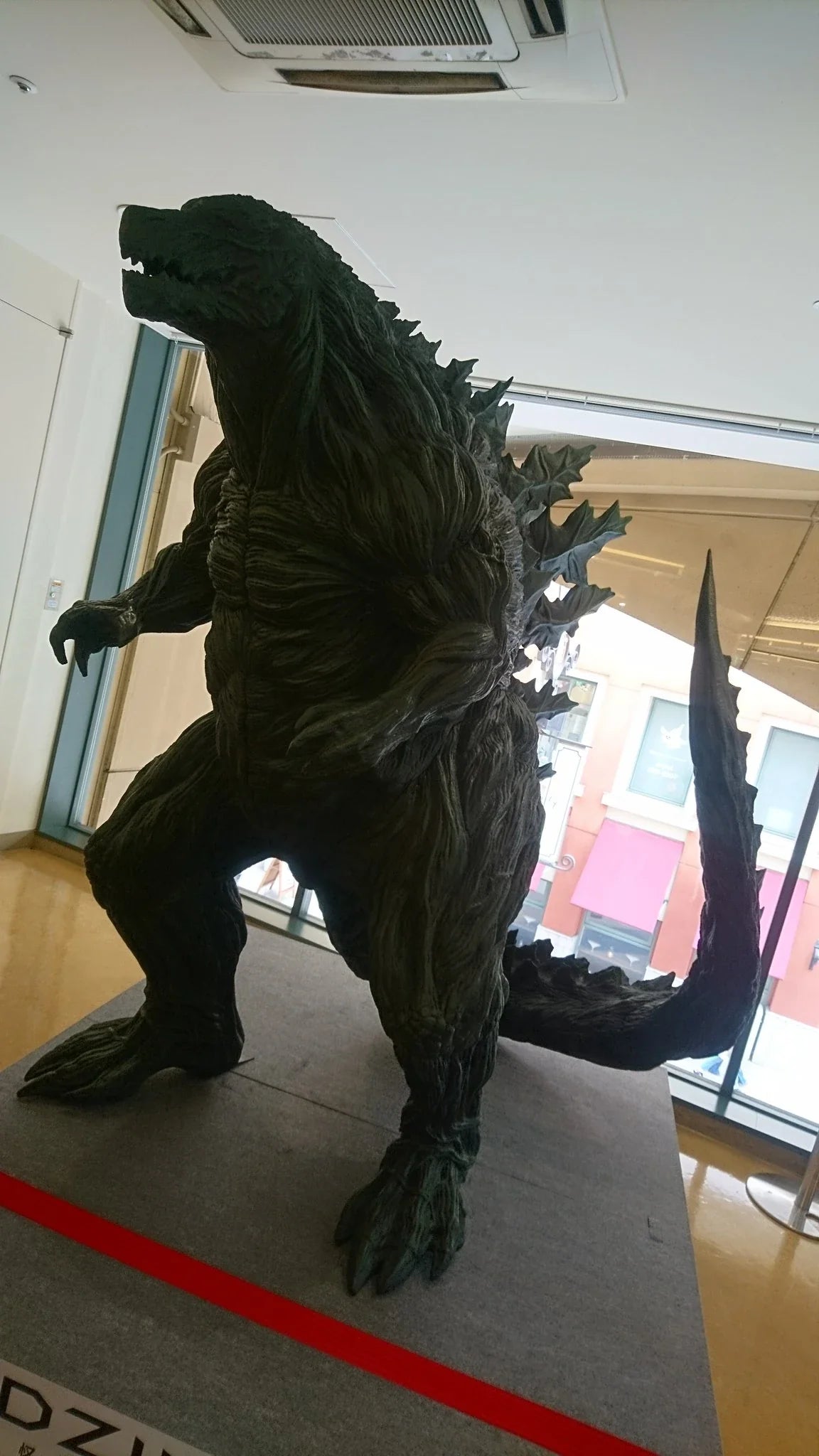
Bandai's Movie Monster Series is the practical entry point to vinyl kaiju collecting: durable PVC figures, broad Godzilla coverage and a roughly six-inch shelf format. The trade-off is limited articulation and paint, so the line rewards collectors who value silhouettes and character range over premium finish.
What is the Movie Monster Series?
Bandai describes it as a PVC figure line that turns monsters from films and tokusatsu productions into three-dimensional sculpts with selected colouring. Standard upright Godzillas are often around 160 millimetres, though exact dimensions vary by creature and release.
The line covers many eras rather than one current film. Official catalogues have included 1954, 1955, 1971, 1989, 1991, Millennium, Shin, anime, Minus and MonsterVerse Godzillas alongside allies and enemies. This depth is why a vinyl shelf can represent films that have no convenient articulated equivalent.
Why do collectors call them soft vinyl?
The Japanese collecting term sofubi comes from soft vinyl. The material is hollow and has some give, unlike a solid resin statue. Limbs and tails are often separate pieces joined during production, leaving visible seams and simple rotating connections.
Soft does not mean indestructible. Heat can deform legs or tails, cold can make material less forgiving, and long contact with painted surfaces can transfer colour. These are display toys that tolerate handling better than many statues, not objects that ignore storage conditions.
How much articulation should you expect?
Most standard releases offer only basic rotation at selected limbs or the tail. Some shapes have almost no useful posing. Newer sub-lines or specially labelled products may add movement, but the ordinary Movie Monster Series promise is a recognisable standing figure, not dynamic action engineering.
Judge the neutral pose before buying. If the feet sit flat, the head angle reads well and the tail supports the silhouette, limited articulation may not matter. If your aim is to recreate grappling or beam attacks, an articulated line is the better tool.
Why does paint vary so much?
Vinyl keeps cost and mass production manageable through selective paint. Eyes, teeth, claws, chest markings or dorsal plates may be treated while broad areas remain the base colour of the material. Promotional samples and reissues can differ.
Collectors sometimes prefer an older release because it has more paint, while a newer sculpt may have sharper anatomy. That comparison must be made product by product. Release year alone does not tell you which version is better.
What are ver.2.0 and Giga releases?
A ver.2.0 label indicates a revised product, but the degree of revision is not universal. Bandai has promoted some as completely renewed sculpts and colouring. Check the official description rather than assuming every numbered update changes the same features.
The Giga branch addresses larger enemy monsters and relative film scale more directly. Official Destoroyah and Biollante listings emphasise the size relationship beside standard Godzilla figures. They are larger and costlier than ordinary vinyl, which makes shelf measurements essential.
How do you identify the exact figure?
- Read the foot stamps and attached tag if present.
- Match the film year, product photographs and release date.
- Compare dorsal-plate paint, eye placement and body colour.
- Check whether the listing shows a reissue, exclusive or ver.2.0.
- Do not identify a figure only as Heisei Godzilla when several screen years and releases look similar.
Tags add information and appeal for some collectors, but a missing tag does not change the sculpt. Decide whether you collect the object, the complete retail presentation or both.
What condition problems matter?
Look for leaning ankles, a tail rotated out of alignment, rubbed silver paint, sticky surfaces, ink transfer and sun fading. A mild warped part can sometimes be corrected carefully with controlled warmth and cooling, but repair carries risk. Ask the seller for a level side view rather than relying on one dramatic angle.
Dust can settle deeply into textured skin. Use gentle dry tools first and avoid aggressive solvents. Printed eyes and small painted teeth are easier to damage than the base vinyl.
How should a first collection be built?
Choose one organising rule: a film, an era, one Godzilla plus its enemies, or one version of each major design. A Heisei finale shelf might use Burning Godzilla, Godzilla Junior and Destoroyah. A 1964 shelf could centre on Godzilla, Mothra, Rodan and Ghidorah.
Do not chase every repaint merely because the line is affordable relative to statues. Reissues can make patience useful, and broad catalogues create duplication quickly. Space is the budget most vinyl collectors notice last.
When should you move to another format?
Move to S.H. MonsterArts when posing and jointed effects matter. Choose a fixed premium figure when uninterrupted sculpt and paint are the priority. Stay with Movie Monster Series when you want to handle the figures, represent obscure kaiju and keep a visually consistent, approachable shelf.
Vinyl's appeal is not that it imitates a premium statue cheaply. It reduces the monster to the features that survive simplification: outline, stance, face and dorsal profile. When those are right, a modest figure can carry an entire film's identity.
Should vinyl figures be kept in bags?
Japanese collector vinyl may arrive bagged with a header card, while standard retail presentation varies. Sealed storage preserves packaging but hides material changes and can press paint against plastic. If condition matters, inspect periodically and avoid airtight heat. Packaging preference is personal; stable storage is not.
What is confirmed, and what is collector opinion?
Bandai's product pages give useful anchors. Movie Monster Series Godzilla 1971 was released on March 22, 2025 at approximately 160 millimetres tall. Destoroyah ver.2.0 followed on May 31 at approximately 170 millimetres, with Bandai describing it as a completely new sculpt and revised colour scheme. Those details identify releases; they do not grade the paint on an individual copy.
The Giga Destoroyah released on October 25, 2025 belongs to a branch that Bandai says is designed to reproduce the enemy's size relative to Godzilla. That confirmed purpose explains the larger display commitment. Whether its extra paint, space and cost make it better than the standard version is collector judgement.
Words such as vintage, rare and definitive are not condition reports. Ask for foot stamps, tag photographs and measurements, then decide how much the exact release matters to your shelf.
Related reading
What Makes a Kaiju a Kaiju? · Blind Box Collecting 101 · S.H.Figuarts vs. Shinkocchou Seihou
Written by Kakebo · Published August 23, 2026.